Electrical enclosures, control panels, and industrial automation systems rely on one fundamental component to organize and distribute power safely and efficiently — the Din Rail Terminal Block. Whether you are designing a new control cabinet or upgrading an existing installation, understanding what a Din Rail Terminal is, how it works, and why it matters can significantly impact your system's reliability, safety, and long-term maintenance costs. This article offers a thorough, technically grounded look at one of the most essential components in modern electrical engineering.
At Yueqing TAER Electric Co., Ltd., our team has spent years engineering and manufacturing high-performance Din Rail Terminal Block solutions for clients across manufacturing, energy, building automation, and transportation industries worldwide. In this guide, we cover everything from basic definitions and product parameters to installation best practices and selection criteria — giving you the knowledge to make confident, informed decisions for your next project.
Table of Contents
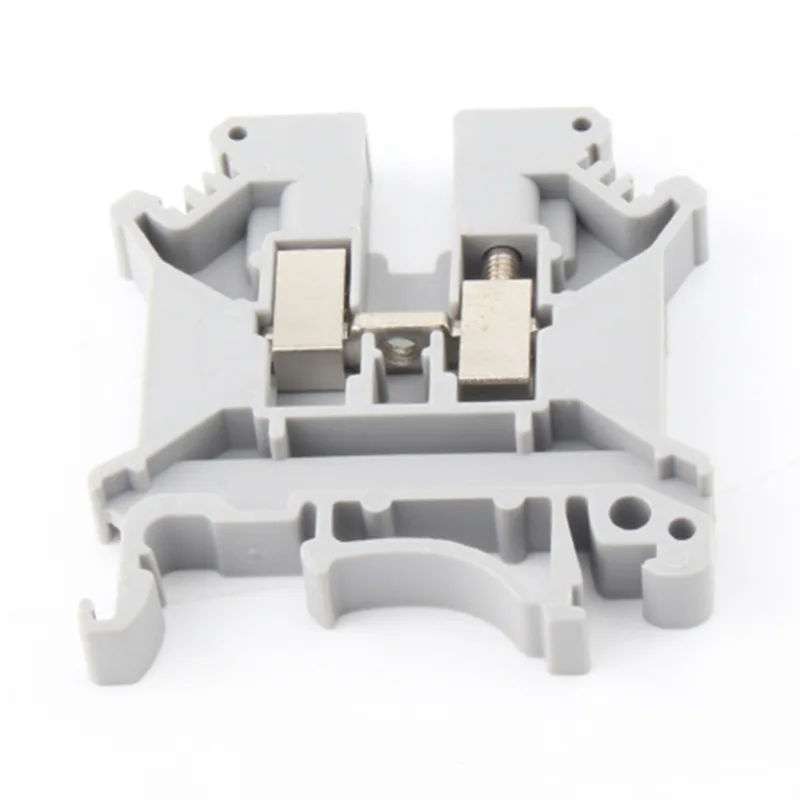
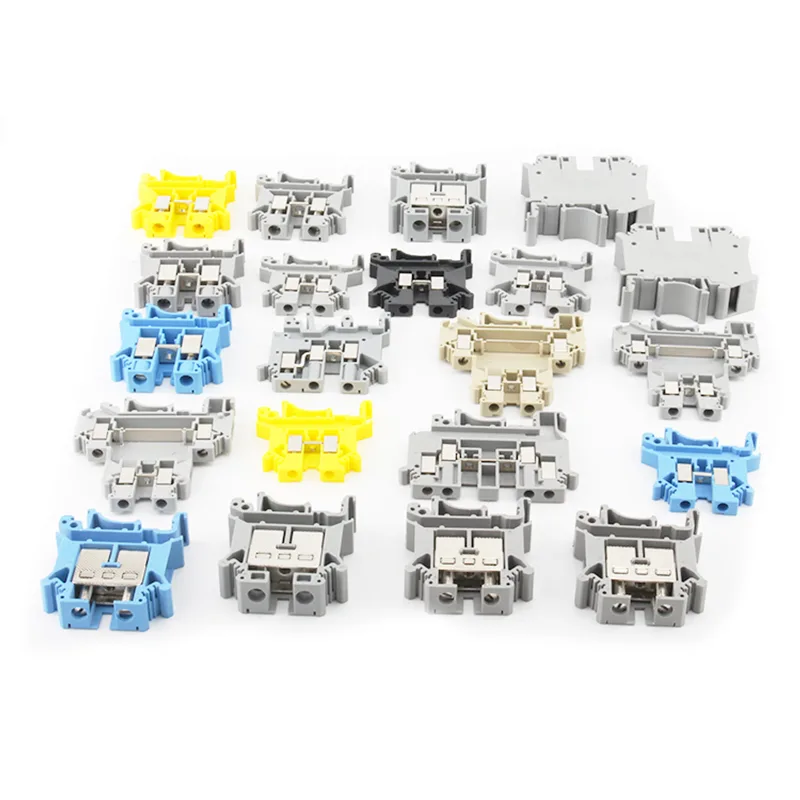
A Din Rail Terminal is a modular, insulated electrical connector designed to mount onto a standardized metal rail — commonly referred to as a DIN rail (Deutsche Institut fur Normung rail) — inside electrical enclosures and control panels. It serves as the central junction point where electrical conductors are connected, organized, and distributed throughout an installation. Rather than relying on loose wire connections or complex custom wiring schemes, the Din Rail Terminal Block provides a clean, repeatable, and code-compliant method of managing electrical circuits.
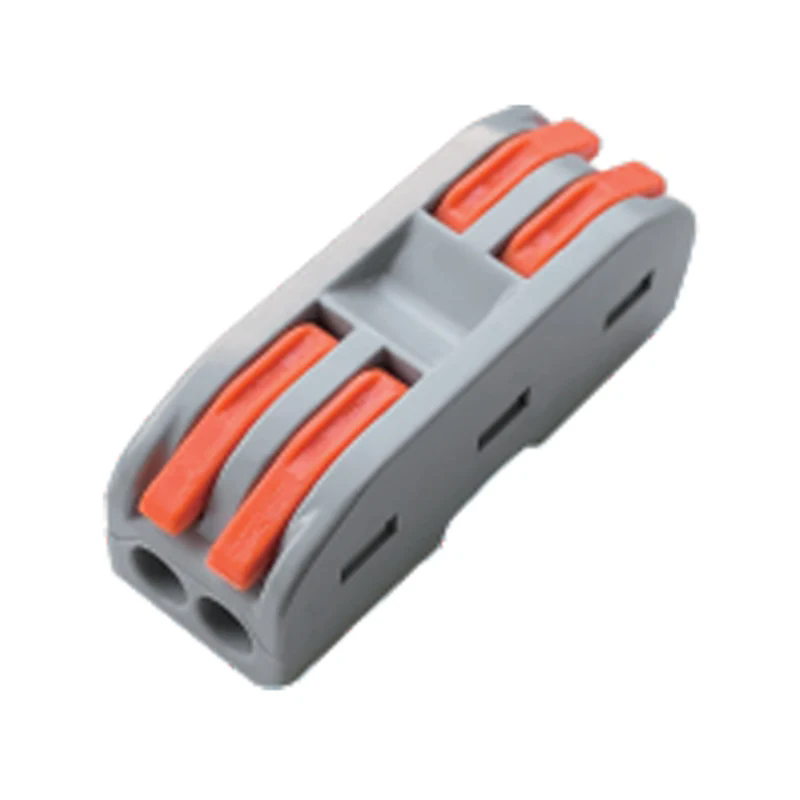
The fundamental operating principle is straightforward. Each terminal block houses a conductive metal element — typically made from copper alloy or tin-plated brass — enclosed within a flame-retardant insulating housing. Wires are inserted into the terminal's ports and secured via clamping mechanisms. The metal carrier snaps or slides onto the DIN rail, locking the block firmly in place. Multiple terminal blocks can be lined up side by side along the rail, creating a structured wiring channel that is easy to inspect, test, and modify.
Key functional components of a standard Din Rail Terminal Block include:
The modular nature of the Din Rail Terminal means that each block can be individually replaced or reconfigured without disturbing adjacent connections — a critical advantage for maintenance teams working under tight production schedules. Our engineers at CHTAR have specifically designed our Din Rail Terminal Block product range with tool-free test ports and color-coded housings to further reduce service time in the field.
Not all Din Rail Terminal Blocks are the same. Different circuit configurations, safety requirements, and space constraints call for different terminal designs. Understanding the main categories allows engineers and procurement professionals to specify exactly the right product for their application.
The most common type, used for straightforward conductor-to-conductor connections. Current passes directly through the internal busbar from one wire entry to the other. Suitable for general power distribution and signal circuits.
Specifically designed to establish a reliable grounding path. The internal metal element is in direct contact with the DIN rail, which is itself grounded. These are color-coded yellow-green per IEC 60445 standards.
Incorporate a miniature fuse holder within the terminal body, providing overcurrent protection at the circuit branch level. Fuse replacement is possible without disconnecting wires, significantly simplifying maintenance.
Feature a built-in knife-blade disconnect mechanism that allows the circuit to be opened without removing wires. Essential in test, measurement, and safety interlocking applications.
Stack two or three circuit levels vertically within a single housing footprint. Our factory supplies double-deck and triple-deck variants that reduce panel width requirements by up to 60% compared to equivalent single-level rows.
Designed for 24V DC sensor wiring in automation systems. Include integrated LED indicators, diode protection, and multi-conductor entries to simplify field device connections.
| Type | Primary Use | Key Feature | Typical Voltage |
| Feed-Through | General wiring | Simple pass-through connection | Up to 1000V AC |
| Ground / Earth | Protective earthing | Rail contact grounding | Up to 1000V AC |
| Fused | Branch circuit protection | Integrated fuse holder | Up to 600V AC |
| Disconnect | Test and isolation | Knife-blade switch | Up to 800V AC |
| Multi-Level | Space-saving layouts | Stacked circuit levels | Up to 500V AC |
| Sensor / Actuator | Automation wiring | LED indicator, diode protection | 24V DC |
Selecting a Din Rail Terminal Block based on price alone is a mistake that leads to failures, warranty claims, and costly downtime. The right selection starts with a clear understanding of the technical parameters that define performance, safety, and longevity. At CHTAR, our Din Rail Terminal Block products are rated and tested against the following critical parameters:
| Parameter | Standard Grade | Heavy Duty Grade | High Voltage Grade |
| Rated Voltage (AC) | 400V | 600V | 1000V |
| Rated Current | 6A - 32A | 40A - 80A | 100A - 125A |
| Wire Range | 0.5 - 6mm2 | 6 - 35mm2 | 25 - 95mm2 |
| Housing Material | PA66 GF15 | PA66 GF30 | PA66 GF30 |
| Flammability | UL 94 V-0 | UL 94 V-0 | UL 94 V-0 |
| Contact Material | Tin-plated copper | Nickel-plated brass | Silver-plated copper |
| Operating Temp. | -25C to +100C | -40C to +110C | -40C to +120C |
| Rail Compatibility | EN 50022 35mm | EN 50022 35mm | EN 50022 35mm / G-rail |
| Certifications | CE, RoHS | CE, UL, RoHS | CE, UL, TUV, RoHS |
| Pollution Degree | 2 | 3 | 3 |
Engineers and panel builders worldwide have converged on the Din Rail Terminal Block as their preferred wiring method for very practical reasons. Understanding these reasons helps justify the investment in quality terminals and explains why substandard alternatives create long-term risk.
The standardization benefit alone is significant. The DIN rail profile is defined by international standards (EN 50022, EN 50023, EN 50035), which means that terminal blocks from our factory at Yueqing TAER Electric Co., Ltd. are physically interchangeable with standard accessories across the market. This protects customers from single-source dependency and simplifies global panel builds where local sourcing is required.
Beyond standardization, the Din Rail Terminal Block delivers measurable advantages across every phase of a project's lifecycle:
Our customers consistently report that switching to a properly specified Din Rail Terminal Block layout reduces panel wiring faults by over 40% and cuts average maintenance call duration by half. These are not marginal improvements — they translate directly into reduced warranty claims, higher customer satisfaction, and lower total cost of ownership over a 10 to 20 year panel service life.
| Lifecycle Stage | Benefit of Din Rail Terminal Block | Estimated Time Saving |
| Panel Design | Standard modular layout, CAD-ready | 10% - 20% |
| Assembly | Tool-free or fast-clamp wiring | 30% - 50% |
| Commissioning | Individual circuit isolation and test | 20% - 35% |
| Maintenance | Individual terminal replacement | 40% - 60% |
| Compliance Audit | Pre-certified components | 15% - 25% |
Selecting the correct Din Rail Terminal Block requires matching the product's rated parameters to the circuit's actual operating conditions — with appropriate safety margins applied. A systematic selection process avoids both over-specification (unnecessary cost) and under-specification (safety and reliability risk).
Follow these steps as a structured selection framework:
| Connection Type | Best For | Vibration Resistance | Wiring Speed | Tool Required |
| Screw Clamp | Field service, flexibility | Medium | Medium | Screwdriver |
| Spring Clamp | Vibration environments | High | Fast | Optional |
| Push-In | Automated assembly | Medium | Very Fast | None |
| IDC | Ribbon cable systems | High | Fast | Insertion tool |
Our technical team at Yueqing TAER Electric Co., Ltd. is available to review your panel schematics and recommend the optimal Din Rail Terminal Block specification for your application. We provide free pre-sales technical consultation for qualified projects.
Manufacturing quality Din Rail Terminal Blocks requires precision at every stage — from raw material selection through to finished product testing. At Yueqing TAER Electric Co., Ltd., our production process is built around strict quality management principles, with ISO 9001 certification governing every manufacturing step.
Our factory operates dedicated production lines for each terminal block family, supported by in-house tooling and mold manufacturing. This gives our engineering team the flexibility to customize housing dimensions, color codes, and marking configurations for OEM customers without minimum order quantity constraints that typically apply when sourcing from trading companies.
Our factory ships Din Rail Terminal Block products to customers in over 40 countries. Our export packaging is designed to protect against transit damage and humidity exposure, with desiccant packs included in every carton for ocean freight shipments. Lead times for standard catalog items are typically 7 to 15 business days from order confirmation.
| Factory Capability | Detail |
| Annual Production Capacity | Over 50 million terminal blocks per year |
| Quality Certifications | ISO 9001, CE, UL, TUV, RoHS |
| Customization | Color, housing size, marking, contact plating |
| MOQ (Standard Items) | 100 pieces |
| MOQ (Custom OEM) | 500 pieces |
| Lead Time (Standard) | 7 - 15 business days |
| Lead Time (Custom) | 20 - 35 business days |
| Export Markets | 40+ countries across 6 continents |
| Technical Support | Pre-sales consultation, product selection, compliance review |
The Din Rail Terminal Block is far more than a passive wiring accessory. It is a precision-engineered component that directly influences the safety, reliability, and maintainability of every electrical panel and control system it is part of. From feed-through blocks handling general distribution circuits to fused and disconnect variants protecting critical loads, each product in our range at Yueqing TAER Electric Co., Ltd. is designed and manufactured to deliver consistent performance across decades of service.
Choosing the right Din Rail Terminal begins with a clear understanding of circuit parameters, environmental conditions, and certification requirements. It continues with selecting a manufacturer who controls quality from raw material to finished product — not one who assembles components sourced from unverified suppliers. Our Din Rail Terminal Block product line is backed by full technical documentation, certified test reports, and a dedicated engineering team ready to support your project from specification through commissioning.
If you are evaluating Din Rail Terminal solutions for a new panel design, a system upgrade, or an OEM product requiring long-term supply continuity, our team at Yueqing TAER Electric Co., Ltd. is ready to assist. Our product catalog covers over 300 standard SKUs, with custom configurations available across all product families.
Our engineering team at Yueqing TAER Electric Co., Ltd. provides free technical consultation and product selection support for qualified projects. Whether you need standard catalog items, custom configurations, or OEM supply agreements, we have the manufacturing capability and product range to meet your requirements.
Contact our sales team today to request product samples, technical datasheets, certification documents, or a project-specific quotation. Response guaranteed within 24 hours on all business inquiries.
Email our team — get the right Din Rail Terminal Block specified for your application today.